


How Does Automatic Food Packaging Machine Boost Profit and Operational Efficiency for Food Manufacturers
September 2, 2026
How Does Automatic Food Packaging Machine Boost Profit and Operational Efficiency for Food Manufacturers
In the highly competitive global food processing industry, operational efficiency, consistent product quality, and cost control are the core factors that determine a brand’s market competitiveness and profit margins. For food manufacturers of all sizes—from snack factories, beverage plants, and frozen food producers to grain and seasoning processing enterprises—manual and semi-automatic packaging modes can no longer meet large-scale, standardized, and low-cost production demands. An automatic food packaging machine has become a must-have intelligent equipment to optimize production lines, cut operational costs, and maximize long-term business profits.
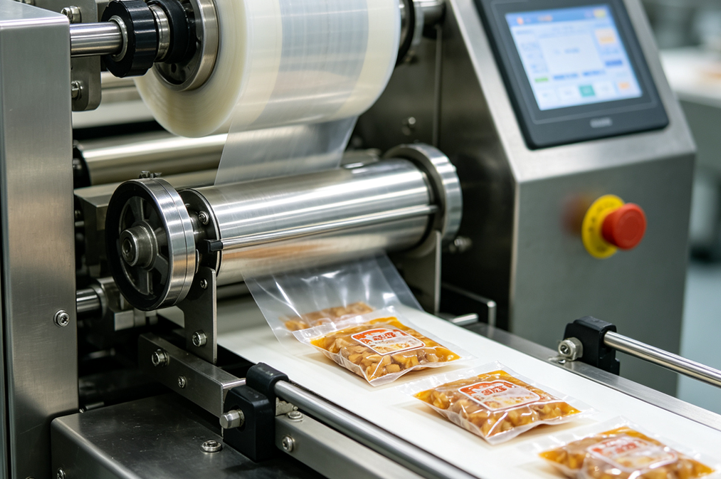
Traditional manual packaging is plagued by inherent drawbacks: low output efficiency, unstable packaging quality, high labor dependence, and massive material waste. These problems lead to delayed order delivery, increased production costs, inconsistent product appearances, and even food safety risks, severely restricting business expansion and profit growth. In contrast, modern fully automatic food packaging machines integrate feeding, weighing, filling, sealing, coding, and finished product output into one streamlined process, completely transforming the traditional packaging workflow and bringing comprehensive economic benefits for food enterprises.

1. Dramatically Cut Labor Costs & Solve Labor Shortage Issues
Labor cost inflation and frequent worker turnover are long-term pain points for global food processing factories. A traditional manual packaging line requires 6-10 skilled workers to complete repetitive packaging procedures, including bag taking, filling, sealing, and labeling, bringing high expenses on salaries, training, and management every year.
Our automatic food packaging machine only needs 1-2 operators to supervise the entire production line, realizing unattended continuous operation. It reduces labor dependence by 50%-70% and effectively saves massive long-term labor costs for enterprises. Meanwhile, it completely avoids production stagnation caused by worker absence, fatigue, or turnover, ensuring stable and uninterrupted production schedules all year round.
2. Skyrocket Production Efficiency & Accelerate Order Delivery
Packaging efficiency is a key bottleneck restricting the overall production capacity of food factories. Manual packaging is slow and easily affected by human factors, with unstable daily output and difficulty in meeting bulk order demands, especially during peak sales seasons.
Equipped with high-precision servo control systems, our automatic food packaging machine supports high-speed continuous packaging, with a maximum speed of 120bags per minute, 3-5 times faster than manual operation. It stably improves the overall production capacity of the factory by more than 30%, greatly shortens order delivery cycles, and helps enterprises take more market orders. Whether for small-batch customized production or large-scale mass production, the machine maintains efficient and stable output, effectively enhancing corporate market responsiveness and customer satisfaction.
3. Minimize Material Waste & Reduce Hidden Production Losses
Irregular manual filling and inaccurate weighing often lead to excessive material filling or substandard product dosage, causing serious raw material waste and product scrapping. Long-term accumulated waste forms huge hidden losses and directly erodes corporate profits.
Our automatic food packaging machine adopts intelligent precision weighing and quantitative filling technology, with a weighing accuracy of ±0.3g and a filling qualification rate of up to 99.8%. It effectively avoids material overflow, insufficient filling, and packaging failure problems caused by human errors. The standardized sealing and cutting process also reduces packaging material waste, minimizing production scrap rates and greatly lowering unit production costs. Every batch of production achieves refined cost control, directly improving gross profit margins.

4. Standardize Packaging Quality & Enhance Brand Competitiveness
In the global food market, standardized and exquisite packaging is not only a basic guarantee of product quality but also a key factor affecting brand image and consumer trust. Manual packaging inevitably has defects such as uneven sealing, irregular packaging shape, and inconsistent coding positions, which reduce product grade and even cause customer complaints and return orders.

Recommended Blog